










Welcome to the home of longevity medicine!
What I saw: this week, I watched a revolution in the tech world. Codex, Opus 4.6, OpenClaw, and a wave of AI coding tools changed how millions of people build software, literally overnight. Coding literacy that used to take years to acquire is now accessible to billions of people in a week. It will impact medicine tremendously.
What I heard: More physicians are asking the same question: how do I build a sustainable longevity practice? They want to know about clinical authority, patient experience, protocols, and business models. But there is no playbook but a lot of interest. I also heard from a highly respected physician/researcher who just returned from China. Her assessment: the biotech infrastructure, AI-driven drug discovery, and clinical trial quality she witnessed are now world-class and in some areas, ahead of where we are in the US or EU. The most important breakthroughs in longevity medicine won’t come from one country, they’ll come from physicians who are paying attention globally. Our job is to stay open-minded, explore the cutting edge wherever it emerges, and bring the best of it back to our patients. That’s what forward-thinking medicine looks like.
What I think: Analog care is about to become the ultimate luxury. Not because digital health fails, but because it succeeds and will become the norm. When platforms can automate diagnostics, prescribe medications, and deliver care at scale, the scarcest resource won’t be access, it will be attention. And for the first time in history, doctors now have the tools to practice truly good medicine at scale: data-driven, preventive, personalized. That makes me deeply optimistic.
Happy sunday!
Dr. David Luu - Founder, longevity docs.™
In this week newsletter:
- Cover Story: The longevity care battle: physician vs digital platforms, with 4 investments physicians must make
- Research Radar: Publications on lifespan heritability, rapamycin, Lp(a) and vulnerable plaque, urolithin A vs spermidine
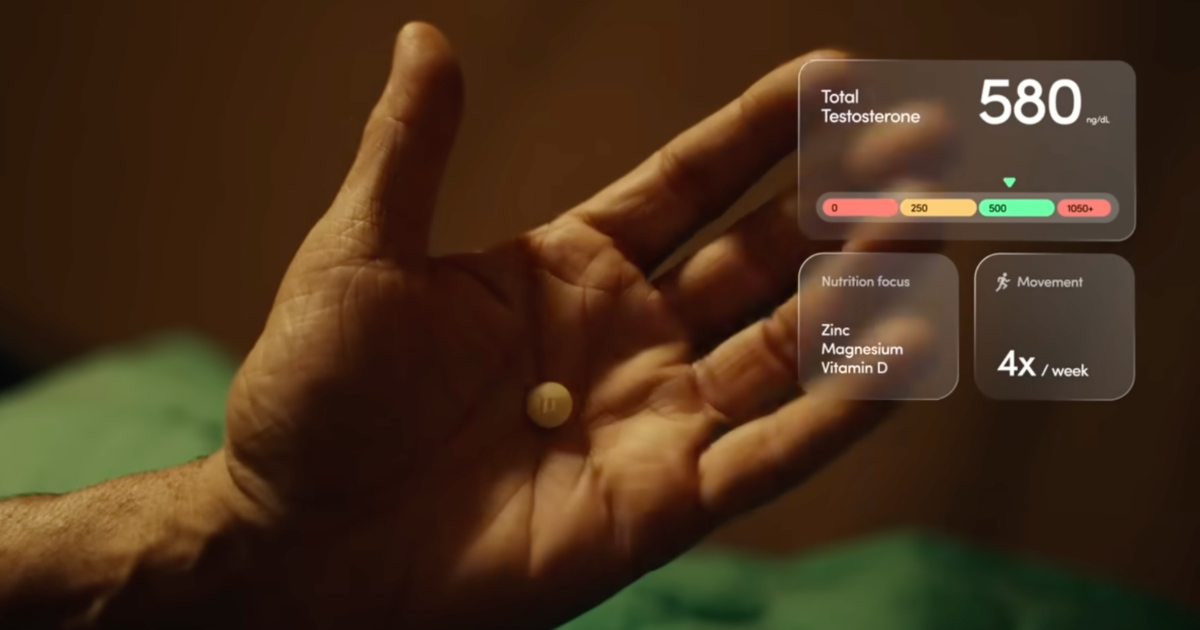
- Intelligence: Amazon/Lifeforce partnership, retatrutide, Clair hormone monitoring, AI-HIPAA privacy gap
- Buzz in the Chat: Physician community debates on retatrutide side effects, and vitamin K2
- Community: Shout out to Dr. Joseph Currier our newest CLD (Certified Longevity Doctor)
Each week, I try to explore one idea that could advance longevity medicine and hopefully support physicians in bringing it to life.
The battle for longevity medicine has begun. On one side: digital platforms armed with venture capital, AI tools, and frictionless patient acquisition. On the other: physicians with 15 years of training, deep clinical knowledge, and a growing sense they’re being outflanked by apps and influencers.
One side optimizes for convenience. The other for clinical rigor. One scales with software. The other depends on relationships. I think there is room for both (if they deliver outcomes)
And if you’re a physician who believes longevity medicine should be led by doctors (not algorithms and checkout carts) you need to understand what’s actually happening, and what you need to do about it.
What platforms got right
In the past five years, digital health platforms launched a revolution. They diagnosed, prescribed, and changed behavior without requiring patients to see a doctor. Most of the time, a simple form was enough.
They had venture capital. They acquired patients at scale. They innovated with apps, tools, and AI. They improved the patient experience. And they filled the gap left by a healthcare system where convenience, access, and cost were never priorities.
Telemedicine platforms proved the model: if you reduce friction, patients will pay out-of-pocket for care that insurance won’t cover and primary care can’t deliver.
Now it’s happening in longevity medicine
What happened in telehealth is now happening in longevity. Platforms are offering MRI scans, advanced labs, wearable integrations, and prescription fulfillment (from statins, ED medications, GLP-1s, compounded hormones, even non-approved research peptides).
The patient journey looks like this: order labs online, upload wearable data, get a prescription, receive supplements and medications by mail. No appointment needed. No physician visit required. Just data in, drugs out.
And the patients? They’re younger than you’d expect. They’re not waiting for their doctor to bring up longevity. They’re getting information from TikTok, friends, and platforms. They’re reading -or at least skimming- research papers. They’re tracking their own biomarkers. They’re looking at outcomes.
Self-care became self-healthcare. And for many, that means physician-less healthcare.
The physician response
On the other side: physicians with updated knowledge, rigorous methods, and clinical training that platforms can’t replicate. They read JAMA, Nature, and The Lancet. They understand biology and medicine at a systems level. They learn from treating thousands of patients.
But they can’t answer the demand. They can’t compete on convenience. And many don’t want to play the visibility game.
One physician said: “I didn’t spend 15 years studying medicine to become an influencer.”
I get it. But here’s the reality: if you’re not visible, you’re invisible. And invisible physicians lose patients to platforms that are visible everywhere: subway, social media, podcast sponsorships, and even SuperBowl ads.
What physicians must do to stay relevant
It doesn’t have to be this way. But staying relevant requires a strategy. Here are the four investments physicians must make:
1. Educate yourself relentlessly
Clinical authority starts with knowledge.
If a patient asks about peptides and your answer is, “They don’t work,” you’ve already lost them. Not because you’re wrong, but because you sound uninformed, dismissive, or outdated.
Patients today are educated, curious, and online.
You need to understand mechanisms. You need to distinguish between insulin and GLP-1 agonists (FDA-approved, well studied) versus research compounds with limited human data. You need to explain regulation, side effects, and where the evidence truly stands.
Authority doesn’t mean being defensive. It means being more informed than the patient and generous with that knowledge.
2. Educate Publicly. Be Visible. Build Trust. Not Followers.
Platforms spend millions educating the market about longevity. They don’t just sell, they shape perception. Physicians must do the same.
Write. Speak. Teach. Explain the science. Break down the mechanisms. Share what you’re learning.
Visibility is not about becoming an influencer. It’s about being discoverable to the patients who are already looking for someone credible.
You don’t need millions of followers. You need a trusted reputation.
In a world saturated with information, trust becomes analog. Patients don’t want a checkout cart. They want to feel heard, understood, and guided.
Be visible but stay grounded. Share your thinking. Share your cases. Stay humble. Keep learning.
3. Build a Circle of Trust. Optimize for Outcomes.
You don’t need to become the loudest voice. You need the best outcomes. That requires collaboration: physician networks, shared protocols, peer-learning, and ethical accountability.
Platforms optimize for acquisition. Physicians must optimize for outcomes.
That’s the moat. That’s the defensibility. That’s what technology can’t replicate.
Build a circle of trust with other physicians. Review cases together. Challenge each other. Raise the standard.
The future: AI democratizes knowledge, not human care
AI will democratize access to medical knowledge. Patients/consumers will have tools that can interpret labs, suggest interventions, and track outcomes. Platforms will get better at personalization, recommendations, and automation.
But AI can’t yet democratize human care. It can’t democratize wisdom. It can’t replace the judgment that comes from treating hundreds of patients. And it can’t replicate the trust that develops when a physician truly understands a patient’s biology, psychology, and life context.
The future of longevity medicine will be deeply rooted in scientific knowledge and human-first care. Patients won’t be uneducated consumers following protocols. They’ll be informed partners expecting collaboration, not paternalism.
That’s where the competition is. Not in who has the best checkout experience. Not in who can ship drugs fastest. But in who can deliver the best clinical outcomes while treating patients as partners, not transactions.
Platforms will win on convenience. Physicians will win on outcomes. I believe the collaboration could actually make the longevity care a really in the next few years.
Every week, the longevitydocs WhatsApp group feels like a front-row seat to the future of medicine. Here’s what had doctors buzzing:
Originally published in The Longevity Medicine Intelligence newsletter (#82).