







The study
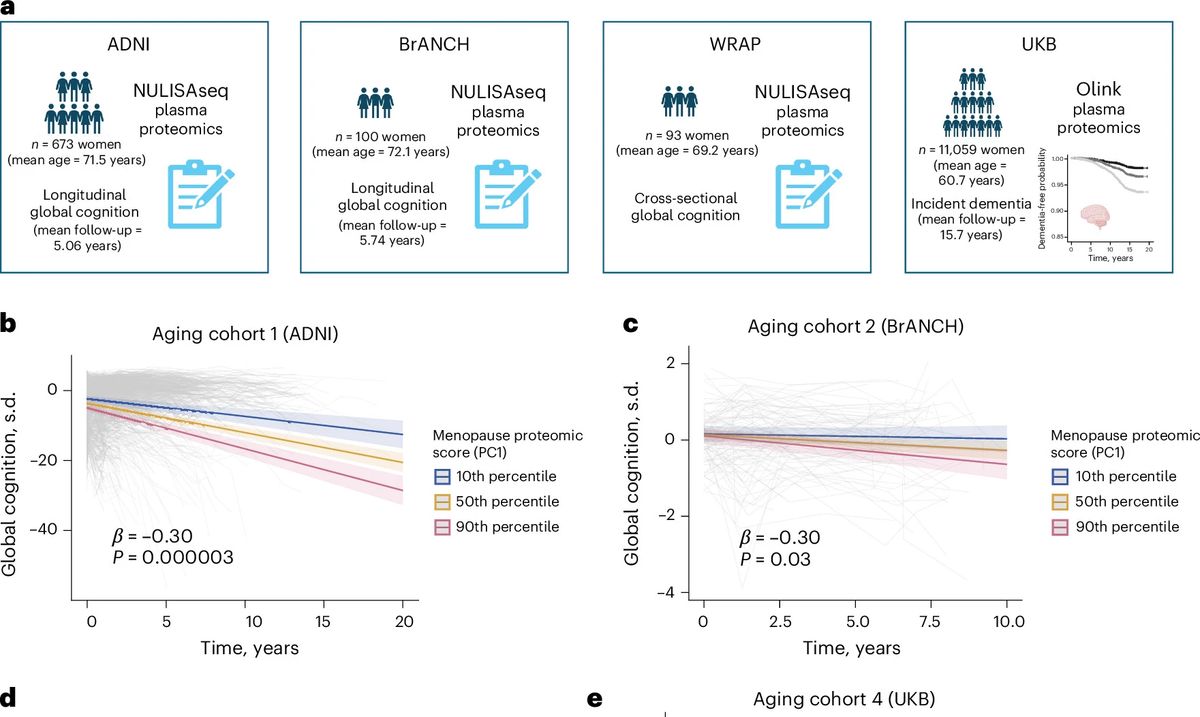
Blood proteomics identified a 16-protein inflammatory, synaptic and Alzheimer’s-related signature (including CCL2, BACE1 and p-tau231). It tracked FSH more closely than chronological age and was stronger in women with hot flashes and night sweats. Across UK Biobank and four cohorts of older women (about 11,900 people), higher scores were linked to worse cognition and a modest increase in Alzheimer’s risk (HR 1.15).
What it means for practice
this proteomic signature may help researchers investigate links between the menopause transition and brain health. It is a discovery finding, not a clinical assay or evidence that hormone therapy changes dementia risk.
Source: Wood Alexander, Casaletto et al. | Nature Medicine | Sep 22, 2026
Originally published in The Longevity Medicine Intelligence newsletter (#108).