


Elon Musk said increasing lifespan isn’t difficult, it’s just programming the hardware with better software. He’s right. Medicine shouldn’t be hard.
Yet healthcare is always the last to update.
If physicians don’t upgrade our infrastructure, someone else will. We’re already seeing this in our community: tech companies building preventive care systems without us, regulators exempting AI tools from medical oversight, patients buying biomarker panels we haven’t validated.
I’m optimistic that better tech, data, communication, and analysis will help patients live longer, healthier lives. But only if physicians stay on the loop.
That’s what this week’s letter is about.
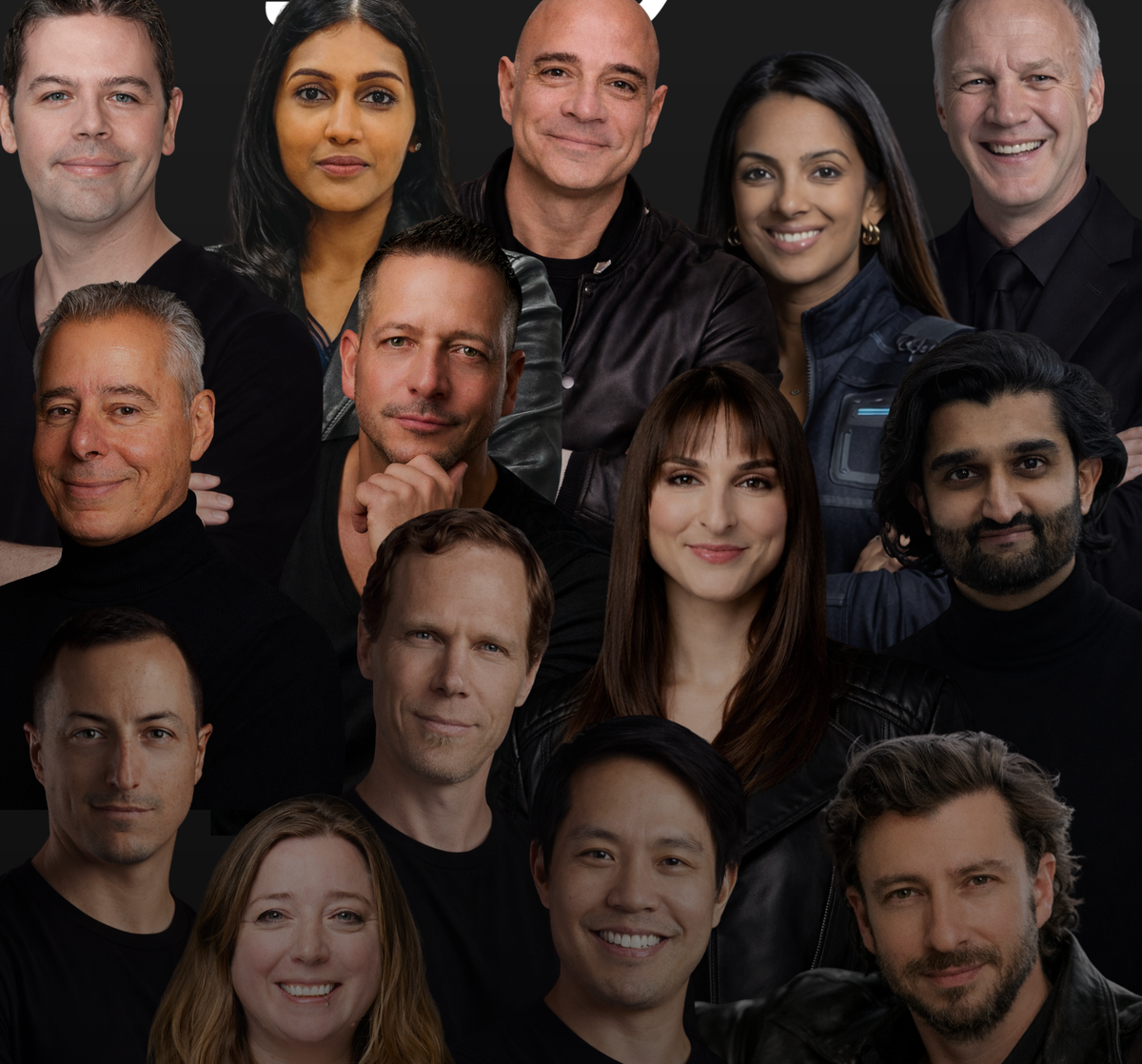
PS: Don’t miss our rockstar longevity tech faculty at the AI Mastermind NYC
Dr. David Luu - Founder, longevity docs.™
Each week, I try to explore one idea that could advance longevity medicine and hopefully support physicians in bringing it to life.
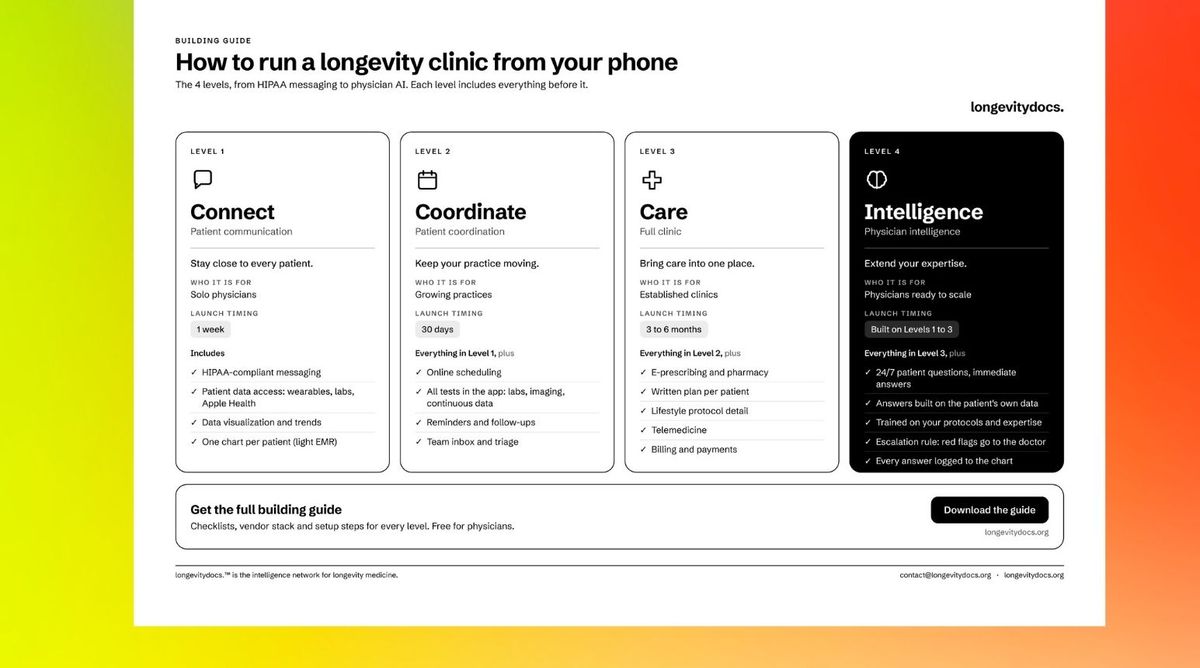
longevitydocs Tech Stack?
Technology is moving faster than medicine’s infrastructure can support it. The FDA just exempted AI health tools from oversight. Tech companies are building ‘body-scan’ centers. Physicians are inheriting interpretation burdens without the systems to handle them.
Longevity medicine is complex by nature. Diagnostics are expanding, data flows continuously, and patients expect personalization. Physicians manage clinical care, teams, workflows, and outcomes - often without infrastructure designed for it.
The result: Too much data, too little intelligence, not enough time.
What would a coherent tech stack that supports physician judgment and preserves time, trust, and clinical integrity would look like? I though about 7 layers to simplify.
1. Diagnostics: Labs, imaging, multi-omics, functional biomarkers. Their role: establish baseline, define trajectory, quantify risk.
Key question: Are you measuring what predicts healthspan, or chasing vanity metrics?
Recommendation: Add multi-omics only when you can act on the data.
2. Clinical Technology: EMRs, portals, dashboards that create longitudinal records: integrating diagnostics, notes, wearables, interventions into one view.
Key question: Can you see a patient’s complete trajectory in under 30 seconds?
Recommendation: If your current EMR can’t handle longitudinal data integration, use a layer on top (practice management + custom dashboards) or switch to systems built for longevity care. Fragmented data kills insight.
3. AI: AI should help physicians think better, not just faster. Detect trends, flag deviations, support risk stratification, surface safety signals early.
Key question: Does your AI explain why, or just what?
Recommendation: Prioritize AI decision support tools over scribes. Look for systems trained on clinical data, not just language. Test before trusting. If it can’t show its reasoning, don’t use it for clinical decisions.
4. Wearables: CGMs, sleep trackers, HRV monitors create feedback loops between visits: early signals, personalized adjustments, real-world tracking.
Key question: Which wearable data actually changes your clinical decisions?
Recommendation: Start with wearables you understand and data you can act on.
5. Devices & Interventions: Neurotech, HBOT, LED, TPE, digital therapeutics: the options explode. The challenge: vetting. What works? What’s clinically relevant? What creates value?
Key question: What’s the evidence level, and who validated it?
Recommendation: Stick to FDA-cleared devices and peer-reviewed interventions until you have infrastructure to evaluate emerging tech. Join physician networks sharing real-world experience. Avoid being an early adopter without safety data.
6. Operations: Team management, billing, CRM, patient communication, support. Managing a clinic means running a company.
Key question: What breaks first when you try to scale from 100 to 200 patients?
Recommendation: Invest in operations before you need it. Automate scheduling, billing, and patient communication early. Hire operational support before clinical support. Most clinics fail on operations, not medicine.
7. Education: Structured access to evolving evidence, protocols, publications, curated and continuously updated.
Key question: How do you stay current when science moves faster than you can read?
Recommendation: Join physician networks with curated intelligence (like longevitydocs Certification CLD). Use AI to scan literature but verify through trusted peers. Create internal protocols that update as evidence evolves. Don’t rely on conferences and podcasts alone.
This is why longevitydocs exists: to help physicians build the infrastructure that makes longevity medicine standard of care On January 31 in NYC, we're doing a deep-dive on each layer with the physicians and scientists who built them. AI & Tech Mastermind. 150 physicians. Small group. Highly curated.
Every week, the longevitydocs WhatsApp group feels like a front-row seat to the future of medicine. Here’s what had doctors buzzing:
Originally published in The Longevity Medicine Intelligence newsletter (#79).