









The study
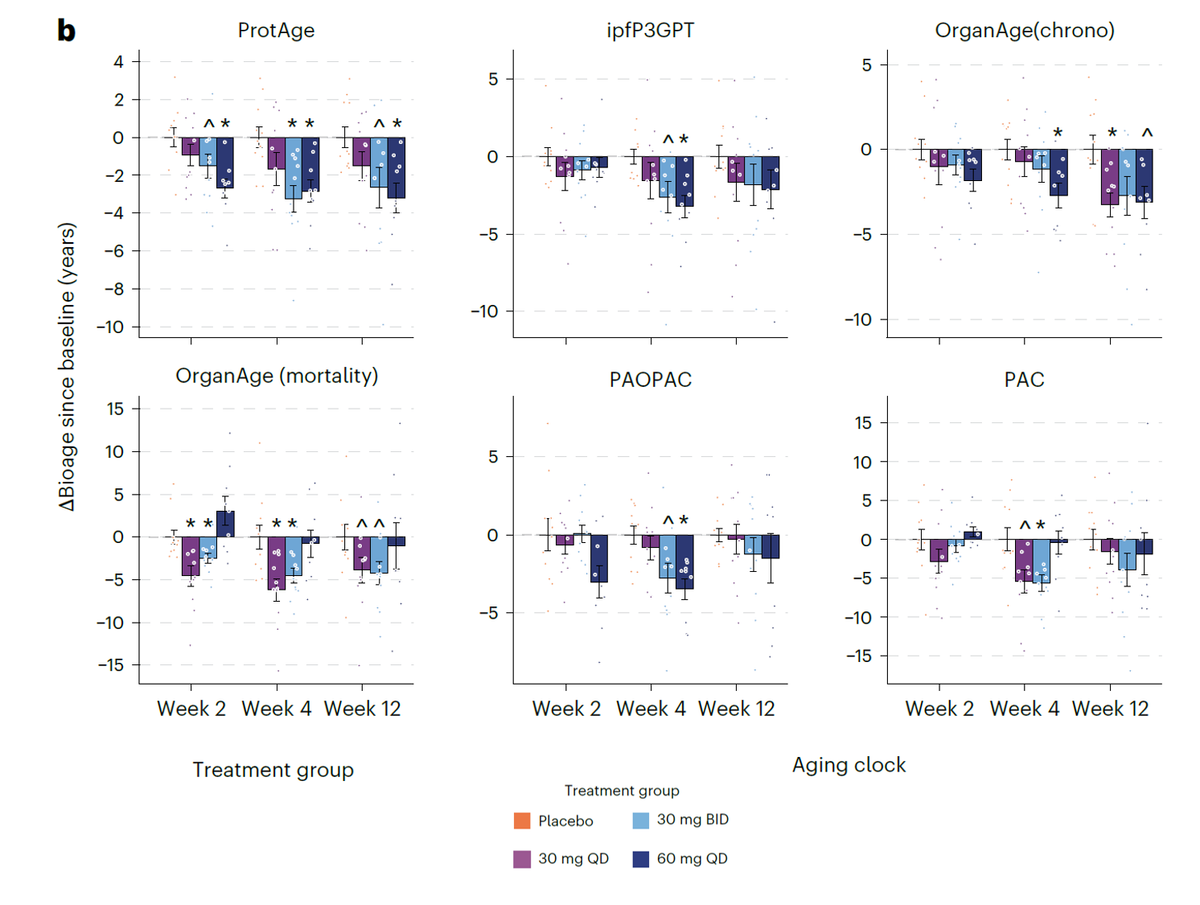
Proteomic substudy of the Phase 2a IPF trial of rentosertib, Insilico’s TNIK inhibitor (n=42). Six proteomic aging clocks, Insilico’s and independent, all shifted younger versus placebo, clearest at 30 mg BID around week 4. Clock change and FVC gain only partially tracked each other. The authors say it themselves: clocks cannot separate an anti-fibrotic effect from a geroprotective one.
What it means for practice
credit to the team for putting the clocks inside the trial. That took foresight, and a positive readout like this one is good news for all of us. It shows what aging endpoints can look like in a real disease trial, and it opens the door for others to do the same. The design is the template: aging-first target, disease indication, multi-clock readout.
Source: Zhavoronkov et al., Nature Biotechnology, Sep 7, 2026
Originally published in The Longevity Medicine Intelligence newsletter (#106).